

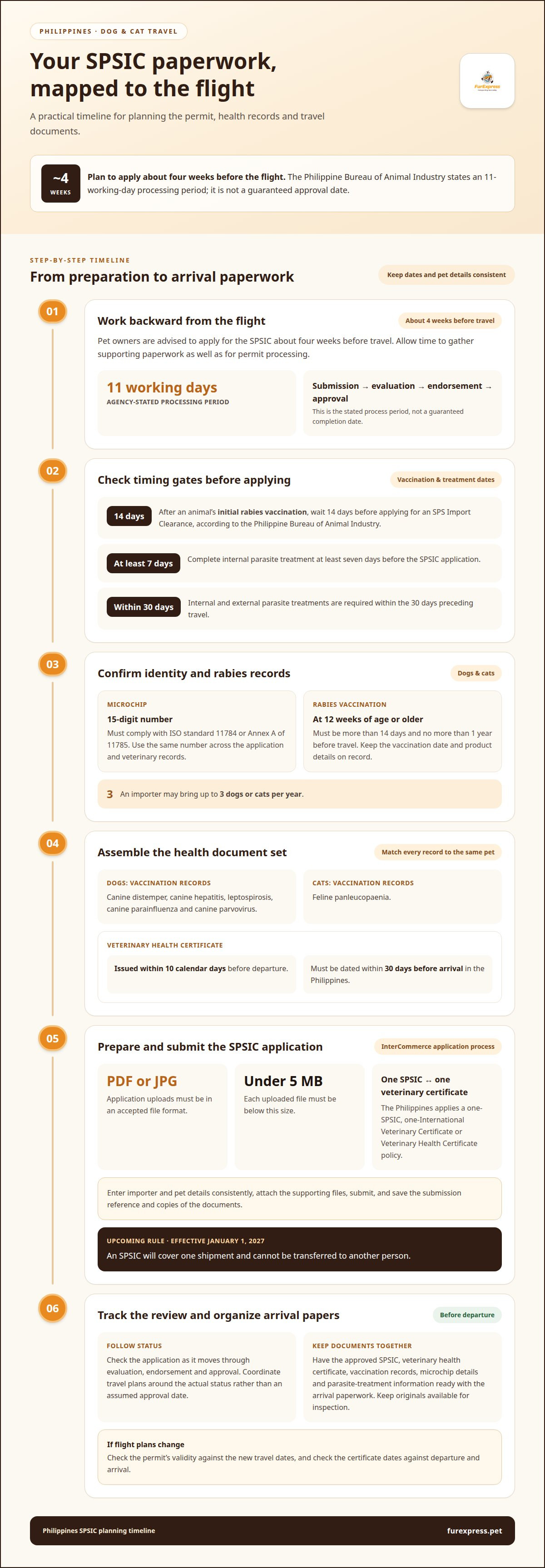
The pet import permit processing time for a dog or cat is 11 working days, according to the Philippine Bureau of Animal Industry, from submission through evaluation, endorsement, and approval of the SPSIC application. Allow time to prepare the supporting paperwork too: pet owners are advised to apply about four weeks before the flight.
It’s understandable to focus on the permit, but the health certificate and supporting documents also need careful timing and preparation. Preparing a complete set helps keep the application and travel arrangements organized.
This guide explains how to apply for a Philippines SPSIC, which health and vaccination records to prepare, and how to assemble the supporting documents. You’ll also learn how to plan around the processing period so your pet’s paperwork is ready for the journey.
Key Takeaways
- Allow for the permit’s 11-working-day processing period, and plan your application well before your pet’s flight.
- Prepare your pet’s identification, vaccination records, and health documents as a coordinated paperwork set.
- Learn which Philippine agency issues the SPSIC and how the application process fits into your travel timeline.
- See how support with import paperwork and pet travel arrangements can make the preparation more manageable.
Philippines Pet Import Process and Required Paperwork
- Plan the application around the flight date. The pet import permit processing time is 11 working days, according to the Philippine Bureau of Animal Industry, covering submission through evaluation, endorsement, and approval. Treat this as the agency’s stated processing period, not a guaranteed completion date. Work backward from departure so the permit application and veterinary appointments fit the travel plan.
- Set the vaccination schedule before submitting. For an animal receiving its initial rabies vaccination, wait 14 days before applying for an SPS Import Clearance, according to the Philippine Bureau of Animal Industry. Record the vaccination date with the pet’s medical records. This helps establish when the application can proceed without conflicting with the planned travel schedule.
- Apply through the SPSIC process. Prepare the importer and pet details, then submit the supporting documents through the application system. Use your pet’s identifying information consistently across the permit application and records. Save the submission reference and keep copies of the documents so you can refer to the same details when tracking the application.
- Track the application through each review stage. Follow the SPSIC status after submission as it moves through evaluation, endorsement, and approval. Keep any status updates with your travel documents. This helps you coordinate the permit with the animal’s certificate and flight arrangements instead of relying on an assumed approval date.
- Keep the approved permit with the arrival paperwork. Before travel, place the approved SPSIC with your pet’s health certificate and supporting records. The permit is required for entry, and the documents should identify the same animal and shipment. If your flight plans change, check the travel dates against the permit’s validity before departure.
Applying for the Philippines SPSIC import permit
- Build the application timeline around your flight. Pet owners are advised to apply for the Philippines SPSIC about four weeks before travel. This gives you time to assemble records before submission and account for the application’s processing stages. Keep the planned departure date, vaccination dates, and certificate schedule together so all document preparation follows one timeline.
- Prepare an application for the correct animal and shipment. Start with the dog or cat’s identifying details, including its microchip number, then gather the supporting paperwork for that pet. The Philippines applies a one-SPSIC, one-International Veterinary Certificate or Veterinary Health Certificate policy. From January 1, 2027, an SPSIC covers one shipment and cannot be transferred to another person.
- Format each supporting file before you submit. SPSIC application uploads must be PDF or JPG files under 5 MB each. Scan records clearly, save each document in an accepted format, and keep a copy of the submitted set. This helps prevent an oversized or unreadable attachment from interrupting an otherwise organized application.
- Submit through the SPSIC application process and save the details. Use the InterCommerce application screens to enter the importer and pet information, attach the prepared documents, and submit the application. Save the submission reference and copies of the files. Return to the application system to follow the status through evaluation, endorsement, and approval.
- Keep the animal count and treatment timing in view. An importer may bring up to 3 dogs or cats per year. Internal parasite treatment must be completed at least seven days before the SPSIC application. Schedule that treatment before submission, and keep its record with the vaccination and health documents. A complete file helps keep the application details and the pet’s travel records aligned.
Health certificates and supporting documents
- Record the microchip details. Dogs and cats entering the Philippines need a 15-digit microchip that complies with ISO standard 11784 or Annex A of 11785. Keep the number consistent across the application, vaccination records, and veterinary health certificate. This identifier connects the animal to its paperwork during clearance at the port of entry.
- Match rabies vaccination records to the travel dates. The rabies vaccination and microchip requirements are specific: the pet needs the compliant 15-digit microchip, and rabies vaccination must be given at 12 weeks of age or older. The vaccine must be more than 14 days and no more than 1 year before travel. Keep the vaccination date and product details with the records.
- Gather the other vaccination details. Dogs need vaccination against canine distemper, canine hepatitis, leptospirosis, canine parainfluenza, and canine parvovirus. Cats need vaccination against feline panleucopaenia. Ask your veterinarian to record each vaccine alongside the rabies vaccination, so the health certificate and supporting documents show the same history.
- Schedule parasite treatment and the health certificate. Dogs and cats need internal and external parasite treatments within the 30 days preceding travel. The health certificate must be issued within 10 calendar days before departure, and it must be dated within 30 days before arrival in the Philippines. Plan these dates against both the flight and the port of entry.
- Keep the documents together for clearance. Assemble the veterinary health certificate, vaccination records, microchip details, and parasite treatment information in one travel file. Use the same pet identity and travel details throughout. Keep the originals available for inspection on arrival, with copies ready for the permit application. If your flight changes, check certificate dates against the revised departure and arrival schedule.
Which Philippine agency issues pet import permits, and how do you apply?
- Identify the issuing agency. The Philippine Bureau of Animal Industry (BAI) issues the Sanitary and Phytosanitary Import Clearance, or SPSIC, for dogs and cats entering the Philippines. This is the import permit to secure before travel. It is separate from the veterinary health certificate, which documents the animal’s health and treatment history.
- Open an SPSIC application through InterCommerce. The BAI application guide uses InterCommerce screens for the permit process. Enter the importer’s details and your pet’s identifying information carefully. Keep the planned shipment details consistent with the supporting records, including the animal’s microchip number and destination port of entry.
- Attach the supporting documents and submit. Include your pet’s health and vaccination records with the application. The application screens guide you through submission and show its status during review. Save the submission details and keep copies of the uploaded paperwork. This gives you a clear record to refer to when tracking the application.
- Wait for BAI evaluation and approval before travel. The permit passes through evaluation, endorsement, and approval. Once approved, the SPS permit is a 3-page document that applicants can print and present at the airport quarantine station. Keep it accessible with the pet’s supporting records for arrival inspection.
- Match the application to the effective rules. New documentary and health requirements for dog and cat SPSIC applications take effect January 1, 2027. Permits approved on or before December 31, 2026, remain valid for 60 days from issue. Use the applicable requirements for the permit’s approval date, and align the permit’s validity with the shipment date.
For help organizing the Philippines import permit process, get support with pet import paperwork alongside your travel preparations.
The Philippine Bureau of Animal Industry says an SPSIC application takes 11 working days to process from submission through evaluation, endorsement, and approval.
FurExpress: Pet Import Assistance to the Philippines
FurExpress assists with pet import arrangements and helps align travel planning with the paperwork, as stated in the written quotation. In-cabin, international cargo, and excess-baggage options are subject to airline acceptance and route.
For support coordinating your pet’s journey alongside your import preparations, FurExpress pet travel assistance can help you consider the travel arrangement that fits your plans.
Contact FurExpress to discuss your pet’s travel arrangements.
Move forward with a clear travel plan
Once the paperwork is underway, choose how your pet will travel and keep that arrangement aligned with the journey. Pet import permit processing time is one part of the schedule; flight arrangements and your pet’s individual needs also shape the plan.
FurExpress offers domestic and international in-cabin pet travel, international pet cargo transport, and pet excess baggage assistance. These options support different travel arrangements, whether your pet will travel beside you or separately. You can discuss which arrangement fits your route and plans while keeping the permit process in view.
For help planning the next step, contact FurExpress for pet import help. With a practical plan in place, you can focus on preparing for a smooth journey together.
Frequently Asked Questions
How long does the full process typically take from start to finish?
There isn’t one fixed start-to-finish duration for every pet. The permit review is only part of the schedule; preparation time depends on your pet’s existing records and when veterinary appointments can be arranged. For planning, count from your first preparation step through arrival, rather than treating the permit review period as the full timeline.
How long does a Philippine pet import permit take to process?
The permit’s processing period is the agency review interval described in the application section above. It covers the SPSIC application stages, not the time needed to prepare supporting paperwork or arrange the flight. Keep these tasks on a separate timeline, so you don’t mistake a submitted application for an issued permit or base travel plans on submission alone.
What documents are required for a pet import permit in the Philippines?
The application needs identifying and veterinary records for the same animal. Prepare the paperwork as a coordinated set, and keep clear copies of the original documents for travel. If a clinic record uses a different spelling or identifier from the application, ask the issuing clinic to resolve the discrepancy before submission. Requirements also depend on when you apply.
How early should you apply for a Philippine pet import permit before travel?
Use the pre-flight application guidance in the permit section as your planning anchor. Start organizing the paperwork before then, and schedule veterinary visits around the flight date and the certificate’s required timing. This gives you a chance to address incomplete records before submitting, rather than discovering a missing item when the travel date is close.
Are quarantine or inspection required when pets arrive in the Philippines?
Yes. Plan for post-arrival home quarantine and inspection at the airport quarantine station. Keep the approved permit and your pet’s travel paperwork accessible for arrival checks, and arrange a suitable home setting before departure. Inspection requirements can depend on the size and circumstances of the import, so include arrival arrangements in your travel planning rather than treating them as airline paperwork.
Do pet import permit processing times differ by country of origin or animal type?
For dogs and cats, the stated Philippines SPSIC processing time is 11 working days from submission through evaluation, endorsement, and approval.


